
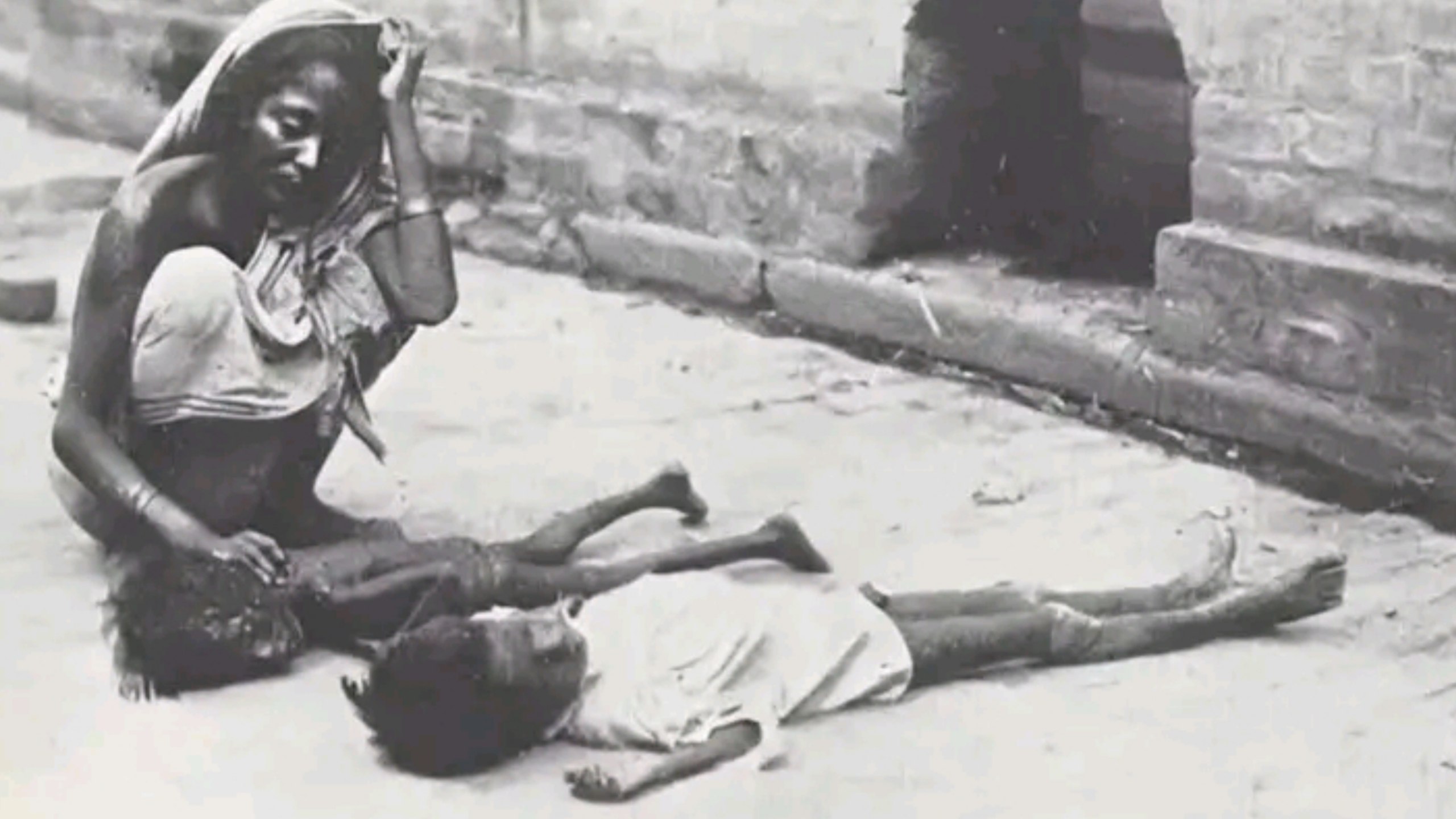
While the world’s eyes were on battlefields in Europe and the Pacific, one of the deadliest famines of the twentieth century unfolded quietly in British-ruled Bengal in 1943. Estimates of the death toll vary, with some two to three million people, most of them from the poorest rural families in the region.
This was unlike most historic famines, which were caused by total crop failure. Bengal produced enough food for its people that year. What it lacked was access, and that failure underlies one of the most contested tragedies in colonial history.
The Outbreak of Crisis
The roots of the famine were a combination of wartime disruption and administrative decisions. In 1942, parts of the rice crop in the coastal districts were damaged by a cyclone, and yields in some areas were further reduced by a fungal disease.
But the greater blow was the occupation of Burma by Japan, which had long supplied Bengal with rice imports. But with that supply cut off and the war creeping ever closer to India’s eastern border, colonial authorities became anxious about a Japanese invasion and started instituting policies that historians agree exacerbated the crisis rather than alleviating it.
The ‘Policy of Denial’ and War Priorities
British authorities in Bengal ordered the confiscation or destruction of tens of thousands of boats used by rural communities for fishing, trade and transport because they feared the boats and stockpiled rice could aid a Japanese advance.
This measure, the denial policy, destroyed local supply chains and prevented many villagers from moving food or getting to market. Meanwhile, rice and grain were being given priority for military use and for urban centres like Calcutta, where war industries and troops needed steady supplies. Hoarding and inflation had already pinched rural Bengal, which now had much less to spare.
The Role of Leadership in War
Churchill’s wartime administration has been under constant criticism ever since for the way it handled the situation. As shipping capacity was diverted elsewhere for the broader war effort, requests from Indian officials for emergency grain shipments were repeatedly slowed or scaled back.
Decisions made in London, shaped by racial attitudes and war priorities, left Bengal near the bottom of the list for relief, as correspondence and later histories suggest. Some historians, including the economist Amartya Sen, have argued that famine was less a matter of a lack of food in general and more a matter of who had the economic means to access it, a breakdown of entitlement rather than of harvests.
Other historians point to the very real constraints of a world war, including shipping shortages, as a mitigating factor, and the argument over how much individual responsibility to assign to Churchill personally continues among scholars today.
A History Not Taught Frequently in Britain
The Bengal famine is, for all its scale, a startlingly small part of Britain’s own historical memory. It is seldom taught in schools and is often left out of the wider stories of Britain’s wartime leadership, which tend to focus on victory in Europe rather than the human cost of colonial rule in South Asia.
But journalists like Ian Stephens of The Statesman defied wartime censorship to print pictures of the starving and dying, thrusting the crisis into the public eye even as officials tried to play down its extent.
Discover More Stories Worth Your Time
Explore Why Wages Stay Frozen?
Discover how stagnant minimum wages are affecting Bangladesh’s garment workers and families.
Check How Conflict Hurts Jobs?
Explore why Middle East tensions could threaten Bangladesh’s jobs and poverty gains.
Find Which Netflix Picks Worth Watching?
Discover binge-worthy Netflix choices for a relaxing weekend at home.
See Which Foods Ease Seasonal Changes?
Explore five comforting foods that can help you feel your best.
Learn How To Spot H1N1?
Discover H1N1 symptoms, prevention tips, and essential facts for Bangladesh.
Why It Still Matters
The famine remains a defining and painful episode in the modern history of Bengal, both present-day Bangladesh and West Bengal, shaping attitudes to colonial rule and to food security for generations.
The point of going back over it is not to lay blame in a vacuum but to ensure that a disaster of this magnitude is not quietly written out of the historical record on either side.
FAQ
How many people died in the 1943 Bengal famine?
Estimates range from roughly 2 to 3 million deaths, though exact figures remain debated among historians.
What caused the Bengal famine?
A combination of factors including the loss of Burmese rice imports, a damaging cyclone, wartime transport disruptions, and British colonial policies that prioritised military and urban needs over rural Bengal.
Was Winston Churchill responsible for the famine?
Churchill’s wartime government has faced significant criticism for delaying relief shipments, though historians differ on how much personal responsibility to assign him versus broader wartime and colonial systemic factors.
Summary: The 1943 Bengal famine killed millions under British colonial administration during World War II. This piece traces its causes, the wartime policies that worsened it, and why it remains largely written out of Britain’s national memory.