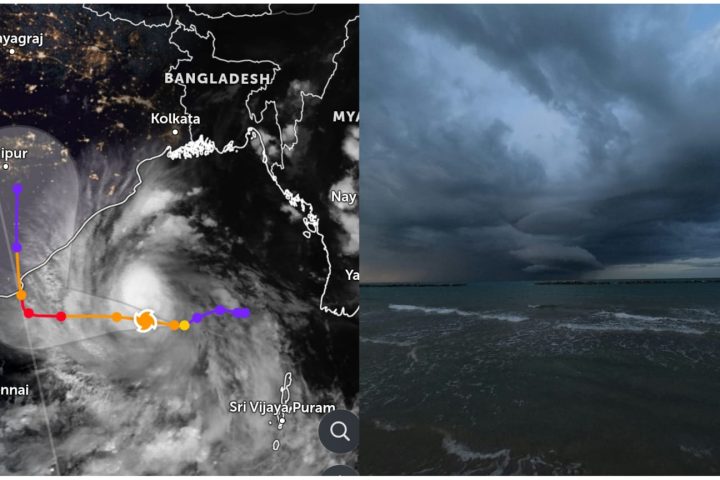


This week’s satellite images have captured one of the season’s most spectacular monsoon phenomena: a near-continuous band of rain clouds that stretches an estimated 7,000 to 10,000 kilometers from northern India across the Himalayas and China to the Korean peninsula. Meteorologists say it is called a monsoon convergence zone, as moist air from the Indian Ocean collides with weather systems that stretch across the length of Asia.
Weather System Spanning a Continent
The cloud band has been responsible for one of the most active phases of the 2026 southwest monsoon, with India registering about 170-180 percent of its normal daily monsoon rainfall over a two-day period, among the wettest spells of the season so far. States like Uttar Pradesh, Uttarakhand, Punjab, Haryana and Delhi-NCR have been the most affected. Meanwhile, eastern and northeastern India continue to receive heavy rainfall due to low-pressure systems originating from the Bay of Bengal. Authorities have issued alerts for flash floods, landslides and swelling river levels in hilly states such as Uttarakhand and Himachal Pradesh.
Bangladesh already under pressure
This news comes at a time when Bangladesh is already facing one of its worst monsoon emergencies in recent years. The government says 51 people have died and tens of thousands are living in evacuation centres after weeks of heavy rain, flooding and landslides in ten districts which have impacted more than a million people. Chattogram and Cox’s Bazar have been the worst hit, where the world’s largest refugee settlement is located. Flash floods and landslides have damaged thousands of shelters as well as homes, roads and schools.
The Flood Forecasting and Warning Centre has repeatedly warned of ongoing flood risk from river basins like the Brahmaputra and Meghna through July and August, historically the country’s most disaster-prone period. The monsoon low-pressure systems are developing over the Bay of Bengal and districts in Chattogram, Rajshahi, Dhaka, Khulna, Barisal and Sylhet divisions could experience heavy to very heavy rainfall within 72-hour periods, authorities said in recent bulletins. Special watch is kept on Bandarban for landslides as tens of thousands of families live in the foothills of its upazilas.
The Significance of the Cloud Band to the Area
The 10,000-km cloud band itself is over India and further east, but its formation highlights the tight linkage of weather systems across the continent. The same monsoon trough dynamics that are feeding rainfall into northern India and beyond are part of the larger circulation that also fuels the low pressure systems forming over the Bay of Bengal, the systems most directly responsible for Bangladesh’s flood risk. Forecasters say the active monsoon phase is expected to continue through the week, which could ease rainfall deficits in parts of India while keeping flood-prone areas of Bangladesh on alert.
Discover More Stories Worth Your Time
Explore Which Water Project Matters?
Discover the scale and impact of Bangladesh’s biggest water project in years.
Check What Changed Six Months?
Explore the BNP government’s progress on major policies since the February election.
See Why Border Tensions Continue?
Discover what BGB-BSF talks reveal about push-in disputes and bilateral relations.
Find Why Pori Stays Trending?
Explore the relationship drama keeping Bangladesh fascinated with Pori’s personal life.
Learn Who Hurts Fishermen Most?
Discover how middlemen, rather than nature, are cutting into hilsa fishermen’s incomes.
What is being told to residents
Authorities in Bangladesh are advising residents in districts prone to floods and landslides to keep an eye on official bulletins from the Bangladesh Meteorological Department and the Flood Forecasting and Warning Centre, avoid travelling through waterlogged or flooded roads, and follow evacuation advice where issued. Officials say the situation remains fluid and could change rapidly if more low-pressure systems develop over the Bay of Bengal in the coming days, with river levels already high in several basins.
Summary: A record-breaking 10,000-km monsoon cloud band spanning India to South Korea has intensified rainfall across Asia. Bangladesh, already battling weeks of flooding, remains under active flood and landslide alerts.