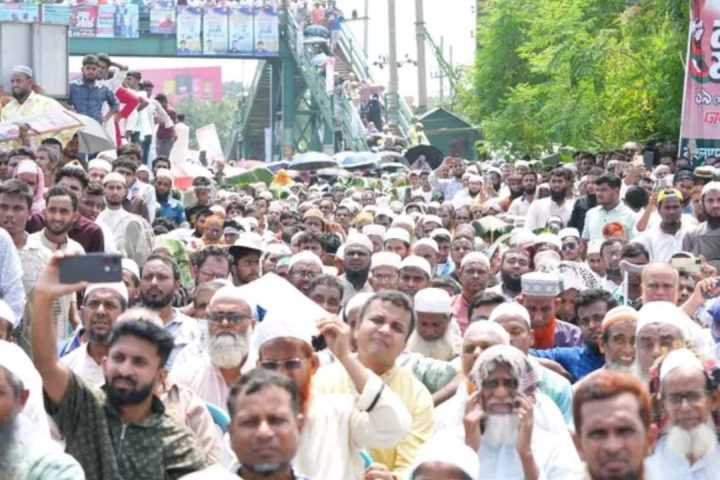
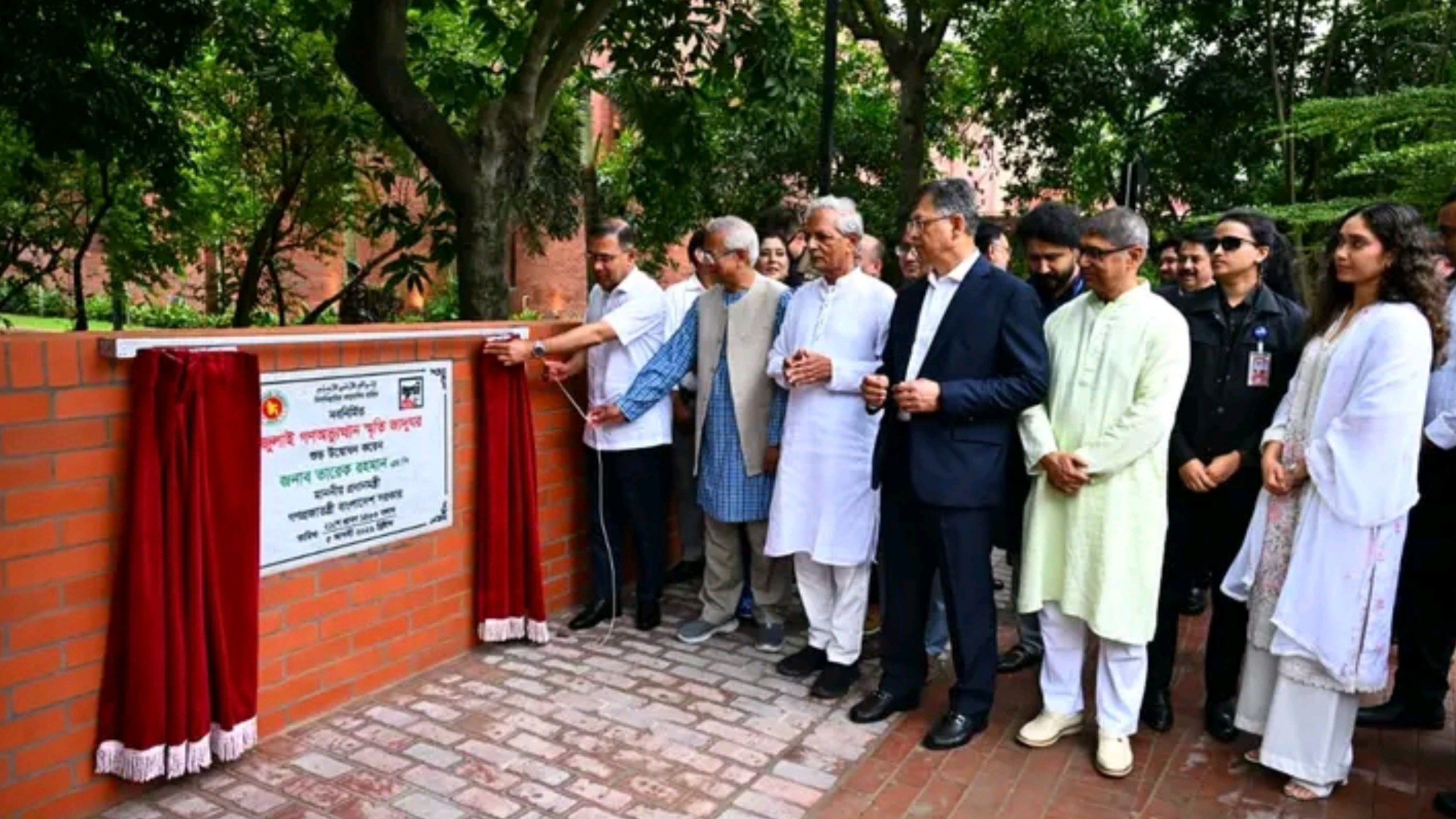
Bangladesh Prime Minister Tarique Rahman on August 5, 2026, opened the July Mass Uprising Memorial Museum at Gono Bhaban on the 2nd anniversary of the fall of the Sheikh Hasina government. The first plaque of the museum was installed by Prime Minister Sheikh Hasina at the Sher-e-Bangla Nagar complex in Dhaka, turning the former prime ministerial residence into a permanent site of public memory for the July 2024 uprising.
From Prime Minister’s Residence To National Museum
Gono Bhaban (People’s House) was the official residence of Sheikh Hasina until her resignation and departure from the country on 5 August 2024. In the hours of chaos after her departure, thousands of protesters flooded the compound, and the building was badly damaged before student volunteers intervened to protect what was left. In September 2024, the interim government, headed by Muhammad Yunus, decided not to fully restore the property but to preserve much of it in its post-uprising condition and turn it into a memorial museum.
A Two-Year Journey to Success
The conversion project was done in phases before it was completed. In mid-2025, government advisers approved proposals for direct procurement to expedite construction, with an estimated budget of about Tk 111 crore for civil and electro-mechanical work. Yunus, the chief adviser, visited the site several times, urging faster progress, and at one point told officials to make a replica of the so-called Aynaghar, the secret prison associated with the previous government’s security agencies, as part of the exhibits.
The museum’s planned opening date of August 5, 2025 has been delayed a year — with the museum finally opening its doors to the public on the second anniversary of the uprising in 2026.
Inaugurated By Tarique Rahman
Tarique Rahman oversaw the inauguration ceremony, taking office as prime minister in February 2026 after the Bangladesh Nationalist Party’s landslide victory in the country’s first post-uprising parliamentary election. He then toured the museum’s galleries, which contain preserved artefacts, photographs, official documents, video footage and personal memorabilia relating to the uprising after unveiling the plaque. A documentary was also screened as part of the opening proceedings, tracing the chronology of the movement from its early days to the events of 5 August 2024.
The first day of the museum was reserved for the invited guests, July fighters and family members of the martyrs, said Cultural Affairs Minister Nitai Roy Chowdhury. After the official inauguration, journalists were admitted.
What Visitors Will See
On August 6, 2026, the museum opened its doors to the public. Visitors must book online through the museum’s ticketing system. Visitors will select a time slot prior to purchasing a ticket. Tk 50 for adults and Tk 25 for children. The prices are kept at a low level to make the site accessible to a wide cross-section of the public.
The displays trace the course of the July uprising, from the origins of the protests to the point at which they became a national movement, the cost to the protesters, and the eventual fall of the Hasina administration. The organisers said the aim is to present a genuine account of the period, not a sanitised version of events. This is why parts of the complex still bear signs of the building’s damage from August 2024.
Discover More Stories Worth Your Time
Explore What Follows Shahabuddin’s Exit?
Discover how Bangladesh’s leadership could change after the president’s departure.
Check Why Assault Case Filed?
Explore the allegations involving actress Snigdha Chowdhury and the Ashiyan chairman.
See How Microplastics Spread?
Discover why Bangladesh’s rivers, salt pans, and fish markets are raising concern.
Find Why Wetlands Face Threat?
Explore how invasive turtles are disrupting biodiversity in Dhaka’s waterways.
Learn Why Army Took Custody?
Discover the latest developments in the Brig Gen Miftah Uddin tribunal case.
Part of a Larger Commemoration Project
The Gono Bhaban museum is part of a wider national project to commemorate the uprising. Meanwhile, the government is also setting up July Memorial Monuments in all 64 districts of Bangladesh, with the first monument being unveiled in the Shahbag area of Dhaka in August 2025. Taken together, these projects represent an effort by successive governments, first the interim administration and now the elected BNP government, to formalise the memory of the movement which ended Sheikh Hasina’s fifteen-year rule.
The museum opening on the second anniversary also has particular significance for many Bangladeshis, coinciding as it does with Hasina herself making her first public appearance since fleeing the country, a coincidence that has added extra attention to how the nation is choosing to remember the events of 2024