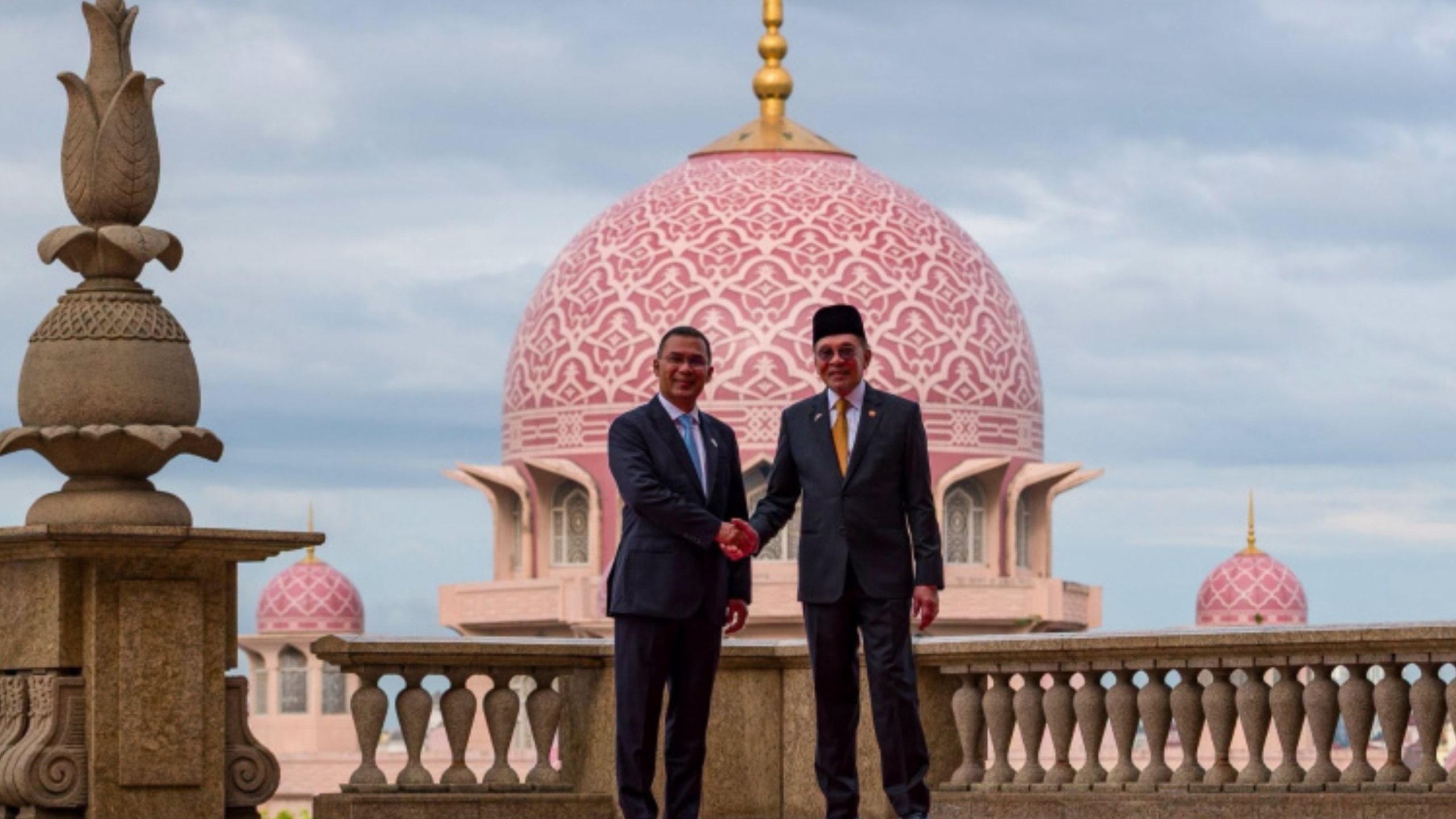
In June 2026, officials from Bangladesh and Malaysia exchanged a modest-looking memorandum in Putrajaya, setting terms for a bilateral free trade agreement between the two countries. Most coverage treated it as routine diplomacy involving manpower, energy and semiconductors. Underneath it sat something bigger. That signing quietly revived a regional trade concept called SEACO, one that Bangladesh first proposed more than three decades ago and never managed to build.
What SEACO Actually Is
SEACO stands for South East Asian Cooperation. It is a proposed economic bloc linking five Muslim-majority nations, Bangladesh, Brunei, Indonesia, Malaysia and the Maldives, all sitting along a single maritime corridor that runs from the Bay of Bengal through the Andaman Sea and the Strait of Malacca into the South China Sea. Counting the Muslim communities in nearby regions such as southern Thailand, Mindanao and parts of India, the bloc’s own estimates put its addressable market above 400 million people, close to a third of the global Muslim population.
The idea traces back to 1992, when it was first raised at a seminar in Bandung, Indonesia, involving the Islamic Development Bank. Successive Bangladeshi governments, regardless of party, kept the concept alive through decades of letters, roundtables and quiet advocacy, even as it repeatedly failed to translate into an actual agreement.
The Problem It Is Trying To Solve
The Organisation of Islamic Cooperation includes 57 member states holding roughly a quarter of the world’s population and much of its energy reserves, yet trade between its members has stayed stubbornly low. Data from the Statistical, Economic and Social Research and Training Centre for Islamic Countries puts intra-OIC exports at under a fifth of members’ total trade, well short of the 25 per cent target the bloc set for itself years ago.
The core issue is scale rather than ambition. Trying to align 57 economies spanning vastly different income levels and political relationships in one move has consistently failed, in the same way past attempts at continent wide integration elsewhere have struggled. Blocs that succeeded, from the early European Coal and Steel Community to ASEAN and the Gulf Cooperation Council, all started small with a handful of complementary economies before expanding. SEACO follows that same logic, built around five countries whose economies fit together rather than compete directly, Bangladesh supplying labour and garments, Indonesia scale and industry, Malaysia advanced manufacturing and Islamic finance, Brunei energy and capital, and the Maldives tourism and blue economy expertise.
Why Halal Certification Is The Starting Point
Every proposal for reviving SEACO points to the same first project: mutual recognition of halal certification. All five countries already certify halal food, pharmaceuticals and cosmetics, but none recognises another’s certificate as valid without repeating the process. That duplication adds cost and delay for exporters, the very businesses a bloc like this is meant to support.
Malaysia’s JAKIM and Indonesia’s BPJPH are widely regarded as the two most credible halal certifying authorities in the world, and Bangladesh brings manufacturing capacity that could plug directly into that system. A shared certification standard covering food, pharmaceuticals and cosmetics would give exporters a visible commercial benefit within a couple of years, which matters because early, tangible wins tend to be what keeps a regional trade initiative from quietly fading away.
Discover More Stories Worth Your Time
Explore What Follows Shahabuddin’s Exit?
Discover how Bangladesh’s leadership could change after the president’s departure.
Check Why Assault Case Filed?
Explore the allegations involving actress Snigdha Chowdhury and the Ashiyan chairman.
See How Microplastics Spread?
Discover why Bangladesh’s rivers, salt pans, and fish markets are raising concern.
Find Why Wetlands Face Threat?
Explore how invasive turtles are disrupting biodiversity in Dhaka’s waterways.
Learn Why Army Took Custody?
Discover the latest developments in the Brig Gen Miftah Uddin tribunal case.
Ports, Shipping And What Comes Next
Trade facilitation is expected to matter more than tariff cuts in the early stages. Slow customs clearance, duplicated paperwork, weak shipping connections and limited trade financing currently cost Bangladeshi exporters more than import duties do. Proposals on the table include electronic certificates of origin that work across borders, a shared single window system for customs, coordinated procedures at ports including Chattogram, Malaysia’s Port Klang and Indonesia’s Tanjung Priok, and a dedicated shipping service across the Bay of Bengal.
Financing institutions such as the Islamic Development Bank Group and the International Islamic Trade Finance Corporation already have tools available for this kind of regional infrastructure. What has been missing is a pipeline of specific, fundable projects for them to back.
A Fragile But Real Opportunity
SEACO still faces real obstacles. The five countries differ in regulatory capacity, direct shipping links between them remain thin, and political enthusiasm for regional projects tends to fade after elections. Bangladesh is also juggling several trade priorities at once, including ASEAN dialogue partner status and accession to the Regional Comprehensive Economic Partnership, any of which could crowd out attention to SEACO.
Even so, the pieces are more aligned than they have been in years. Bangladesh’s new government made Malaysia its first foreign visit destination, and the Bangladesh-Malaysia free trade memorandum gives SEACO its first concrete template. What began as a decades-old proposal now has a real signed document behind it. Whether that becomes the foundation of a working trade bloc, or another entry in a long list of unrealised regional ambitions, depends on what happens next in Dhaka.