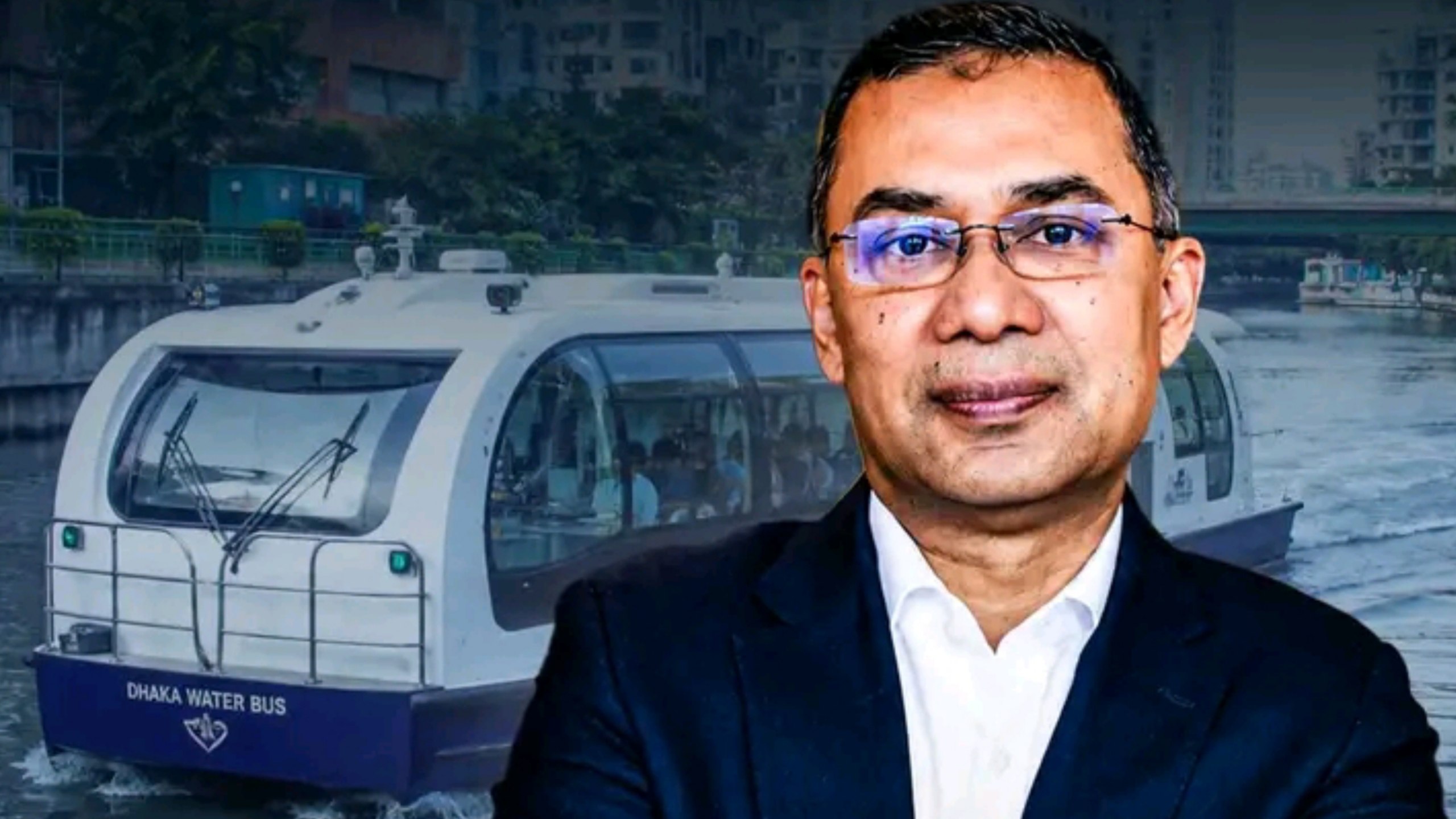
The Bangladesh government has decided to revive the waterways surrounding Dhaka and open the door for private companies to operate water bus services, marking the latest attempt to turn the capital’s long-neglected rivers into a working part of its transport network.
What Was Decided
The decision was taken at a meeting chaired by Prime Minister Tarique Rahman at the Cabinet Division’s conference room at the Bangladesh Secretariat on Sunday. According to the Prime Minister’s Deputy Press Secretary Shahadat Hossain Shadhin, the meeting decided to allow interested private companies to operate water bus services on designated routes around the capital, with proposals from operators to be evaluated before approval. The meeting also decided to restore and keep the waterways surrounding Dhaka navigable in order to improve water-based transportation and ease urban mobility.
Tackling Pollution and Drainage Alongside Transport
Beyond transport, the prime minister directed the authorities concerned to take coordinated steps to curb pollution in the rivers surrounding Dhaka, improve the capital’s drainage system, and ensure normal water flow by maintaining navigability. He also instructed authorities to plant different species of trees along riverfront walkways to protect the environment and enhance the appearance of the riverbanks. Shipping Minister Shaikh Rabiul Alam, State Minister Sheikh Faridul Islam, and administrators from both the Dhaka North and Dhaka South City Corporations attended the meeting.
A Long History of Stalled Attempts
Dhaka’s push to revive its waterways is not new. The first initiative to build circular waterways around the capital and launch water bus services dates back to 2000, with two water buses inaugurated on the Ashulia-Sadarghat route in 2004. That service was suspended within a short time and reopened in 2010, but the government has attempted to revive the route on four separate occasions without lasting success. A more ambitious circular waterways plan, drawn up under the country’s 100-year Delta Plan, has set a target of 2030 to restore navigation on the Buriganga, Turag, Balu, and Shitalakkhya rivers along with the Tongi canal, at an estimated cost of $2.9 billion.
Why the Waterways Matter
Dhaka’s road network has long struggled to keep pace with the city’s population growth, with research from the World Bank and the Bangladesh University of Engineering and Technology finding that traffic in parts of the city moves at a pace close to walking speed. Experts have repeatedly pointed to the city’s underused rivers and canals as a natural, low-cost alternative that could ease pressure on roads if properly restored, though poor maintenance, pollution, and encroachment have historically limited their usefulness. The latest push also follows a broader government initiative announced earlier this year to build a multimodal commuter network combining rail, bus, and waterway links between Dhaka and surrounding districts including Shariatpur, Chandpur, and Munshiganj, aimed at easing the pressure of population growth on the capital.
Discover More Stories Worth Your Time
Explore What Follows Shahabuddin’s Exit?
Discover how Bangladesh’s leadership could change after the president’s departure.
Check Why Assault Case Filed?
Explore the allegations involving actress Snigdha Chowdhury and the Ashiyan chairman.
See How Microplastics Spread?
Discover why Bangladesh’s rivers, salt pans, and fish markets are raising concern.
Find Why Wetlands Face Threat?
Explore how invasive turtles are disrupting biodiversity in Dhaka’s waterways.
Learn Why Army Took Custody?
Discover the latest developments in the Brig Gen Miftah Uddin tribunal case.
Modernisation Efforts Already Underway
The government has also been working to modernise the country’s inland waterway infrastructure more broadly. Shipping Minister Shaikh Rabiul Alam told parliament earlier this year that Aids to Navigation systems integrated with remote monitoring technology have already been installed on several important routes, including the Ghorashal-Mymensingh corridor, under the Bangladesh Regional Waterway Transport Project, as part of a longer-term effort to ensure safe, uninterrupted navigation throughout the year.
With private companies now set to submit proposals for water bus operations, attention will turn to how quickly routes can be finalised and services launched, given the repeated failures of past attempts to sustain water transport around the capital. Success is also likely to depend on how effectively the accompanying measures on pollution control, drainage, and river navigability are implemented, since previous efforts to revive Dhaka’s waterways have often stalled over exactly these underlying infrastructure problems.
Summary: The Bangladesh government has decided to restore navigability of Dhaka’s surrounding waterways and allow private companies to operate water bus services, as part of an initiative led by Prime Minister Tarique Rahman to ease the capital’s transport pressure.